Clear, 53° F
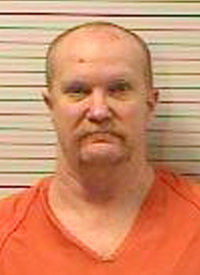
The Wyoming Supreme Court says a former Cody resident must keep serving the 13-plus-year prison sentence he received in connection with a 2019 murder.
Though Joseph Underwood contended that a …
This item is available in full to subscribers.
The Powell Tribune has expanded its online content. To continue reading, you will need to either log in to your subscriber account, or purchase a subscription.
If you are a current print subscriber, you can set up a free web account by clicking here.
If you already have a web account, but need to reset it, you can do so by clicking here.
If you would like to purchase a subscription click here.
Please log in to continue |
|
The Wyoming Supreme Court says a former Cody resident must keep serving the 13-plus-year prison sentence he received in connection with a 2019 murder.
Though Joseph Underwood contended that a Park County judge failed to accommodate his mental disabilities and violated his constitutional rights, the state’s high court rejected Underwood’s arguments on Monday. The court unanimously ruled the 52-year-old Underwood knew what he was doing when he entered a type of guilty plea to multiple charges last year.
“This is not a case in which the record shows a defendant’s disability prevented him from understanding the change of plea proceeding or knowingly and voluntarily entering his pleas,” Justice John Fenn wrote for the court.
Rather, Fenn said, the record shows District Judge Bill Simpson “repeatedly” worked to accommodate Underwood’s needs. The court ruled that Underwood’s 13.2- to 14.5-year prison sentence will stand.
The sentence imposed by Simpson was the maximum allowed under the law, with the judge describing Underwood’s actions as “monstrous … demonic, devious, cunning, [and] demented.”
Monday’s decision could represent the final word on the case, which has stretched out over seven years through a series of convoluted legal proceedings.
Victimizing a family
Authorities say Underwood murdered 40-year-old Angela Elizondo in Cheyenne in November 2019. Family members have described Elizondo as a mother, daughter, aunt and friend who was compassionate and empathetic.
When he met Elizondo at a cafe, Underwood had recently completed a multi-year prison sentence for threatening his ex-wife and another family member with a gun in Cody; the 2014 incident had culminated in an hourslong standoff with Cody police that only ended when Underwood shot himself in the jaw.
However, Elizondo’s mother, Cecilia, said in court last year that Underwood deceived Elizondo and played on her empathy before stalking her.
“He is not the person he claimed to be,” Cecilia said, adding that, “By the time she [Elizondo] started to realize the reality of things, it was escalating too fast.”
Authorities say Underwood fatally strangled Elizondo and then had sexual contact with her body. Her family members have described Underwood as a “monster.”
A failed prosecution
Laramie County prosecutors attempted to pursue first-degree murder and other charges against Underwood, but abandoned the case in 2022 after experts concluded he was mentally unfit to face a trial.
While the evaluators said Underwood understood that what he had done was wrong and understood the criminal justice process, they believed a neurocognitive disorder made him unable to keep up with what was happening in the courtroom; court records say Underwood had suffered brain damage in a 1992 motorcycle crash and in the 2014 standoff.
Though the Laramie County case was permanently dismissed, the Park County Attorney’s Office decided to bring its own set of lesser charges. Those counts related to Underwood’s attempt to hide Elizondo’s body south of Cody and a subsequent flight from law enforcement. The most serious count was a felony charge of concealing or disposing of a human body.
A different evaluator was brought in for the Park County case, and both he and one of the earlier evaluators concluded that Underwood was mentally fit for a trial — if some accommodations were made for his slow processing speed. Relying on their recommendations, Circuit Court Judge Joey Darrah allowed the case to proceed with a set of accommodations in place.
Underwood eventually decided to enter so-called “Alford pleas” to all five charges he faced; it’s a type of plea in which a defendant continues to assert their innocence, but basically agrees to be found guilty.
Reversing his plea
On appeal, Underwood’s court-appointed defense attorneys contended that his Alford pleas were involuntarily given his mental status. They specifically took issue with the fact that Underwood wasn’t provided with an “informed assistant” to help him navigate the court hearings. However, the Supreme Court noted there was no requirement to provide an assistant.
Justice Fenn also pointed out in the opinion that Judge Simpson “slowed the proceedings, used plain and simplified language, repeatedly explained and clarified matters to Mr. Underwood, allowed Mr. Underwood to interject and ask questions, and permitted him to take breaks, including a 30-minute break to confer privately with his counsel in a separate room.”
“The totality of the circumstances establishes Mr. Underwood entered his pleas knowingly and voluntarily,” Fenn wrote.
Prosecutors have also argued that Underwood has exaggerated his mental issues at times. For example, during the recent appeal, the Wyoming Attorney General’s Office noted that Underwood claimed to have a “hard time” writing, but still penned roughly two dozen letters to the court while his case was pending. That included some in which he said he couldn’t understand how judges had found him competent to proceed given his mental condition.
Underwood has been incarcerated since early November 2019, when local authorities chased him down and arrested him south of Cody. He’s currently being held at the Wyoming State Penitentiary in Rawlins. According to Wyoming Department of Corrections records, Underwood is currently projected to be released from prison on Sept. 4, 2030.