Mostly Clear, 48° F
Only one in five eighth graders read for fun anymore, while 65% watch three hours or more of television each day. Incredibly, the average kindergarten graduate has already seen more than 5,000 …
This item is available in full to subscribers.
The Powell Tribune has expanded its online content. To continue reading, you will need to either log in to your subscriber account, or purchase a subscription.
If you are a current print subscriber, you can set up a free web account by clicking here.
If you already have a web account, but need to reset it, you can do so by clicking here.
If you would like to purchase a subscription click here.
Please log in to continue |
|
Only one in five eighth graders read for fun anymore, while 65% watch three hours or more of television each day. Incredibly, the average kindergarten graduate has already seen more than 5,000 hours of television in his or her young life (more time than it takes to earn a degree). In fact, the television industry estimates that over 2 million children under the age of 11 are still watching TV at midnight each night.
These statistics do not bode well for a literate American populace when the studies show that reading proficiency declines as TV viewing increases. Jim Trelease, the read-aloud guy from yesteryear, was unsurprisingly unapologetic in his claims that in its short lifetime, television has become the major stumbling block to literacy in America.
But if the purpose of education is “to learn to think,” and the electronic drug (not to mention social media) is producing lamebrains, how do we change their minds? Trelease said, just turn off the TV, get out a good book, and read aloud! Ever the optimist, he believed that a nation where 90% of the children can read and choose to read, instead of the present 40%-50%, is not inconceivable. Moreover, he said the earlier you start, the better. The issue is not understanding, but conditioning. The child gets used to the parent’s voice and the entire reading experience, and something deeply relational begins to develop.
Thankfully, a growing number of young parents nowadays are seeing the importance and seizing the opportunity. Recognizing literacy as the foundation every child needs to soar in life is critical, and be assured that as this foundation is laid at home, most classroom teachers will be highly committed to strengthening the same at school.
We know that if children can spell a word, they can read it, but just because a child can read a word does not mean he or she can spell it. So the science of reading tells us to begin with phonology (the sound structure of words) and orthography (the spelling system of English) and give children all the tools they need for encoding (spelling) words. This will automatically transfer, then, to decoding (reading) words. In this regard, an Orton-based method that teaches the logic and code of English through the time-tested journey of spelling to reading is the best way to go curriculum-wise.
So as parents read to (or with!) their children at home, and we pursue the path to strengthen all things literacy at school, we can anticipate the exponential fruit it will bear. Young people who love to read are usually well-read, and young people who are good at reading are much more likely to do it!
The end result will be a literate citizenry, and the end result of that will be a thinking people — education’s ultimate purpose.
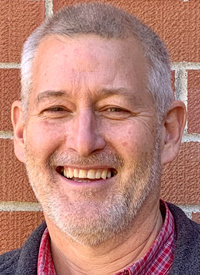
(Brian Schroeder is the former Wyoming Superintendent of Public Instruction, an ordained minister and founder/president of The ChrisCorps Association, bschroeder081858@gmail.com)