Clear, 46° F
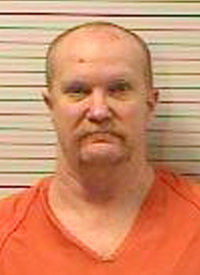
A former Cody resident who was imprisoned in connection with a 2019 murder is seeking to have his sentence overturned by the Wyoming Supreme Court.
Attorneys representing 51-year-old Joseph …
This item is available in full to subscribers.
The Powell Tribune has expanded its online content. To continue reading, you will need to either log in to your subscriber account, or purchase a subscription.
If you are a current print subscriber, you can set up a free web account by clicking here.
If you already have a web account, but need to reset it, you can do so by clicking here.
If you would like to purchase a subscription click here.
Please log in to continue |
|
A former Cody resident who was imprisoned in connection with a 2019 murder is seeking to have his sentence overturned by the Wyoming Supreme Court.
Attorneys representing 51-year-old Joseph Underwood assert that a judge failed to make accommodations for Underwood’s brain injuries and violated his rights when sentencing him to over 13 years of prison time last fall. Underwood had entered a form of guilty plea to all of the charges he faced, but without the needed accommodations, those pleas “were not knowing, voluntary, or intelligent, and the resulting convictions must be reversed,” say Kirk Morgan and Dina Hardwick of the State Public Defender’s Office.
“By accepting and entering judgment on Alford pleas without the accommodations needed to render him competent, the court stripped him of his right not to be convicted while incompetent …,” Morgan and Hardwick wrote in a Wednesday brief.
Competent to proceed
Since the murder of 40-year-old Angela Elizondo in October 2019, Underwood has been the sole suspect. Court records say he told authorities that he might have strangled her while he admitted to having sexual contact with her corpse and to later depositing her body south of Cody.
But there have been repeated questions about whether Underwood — who suffered brain damage from a motorcycle accident and a suicide attempt — is competent enough to face criminal charges.
An attempt to prosecute him for first-degree murder in Cheyenne fell apart after experts concluded he was not mentally fit to stand trial; that resulted in Laramie County’s charges being dismissed in 2022. However, the Park County Prosecuting Attorney’s Office fared better with its own set of charges.
While the most serious alleged crimes occurred in Cheyenne, Park County prosecutors brought two felony and two misdemeanor charges against Underwood for dumping Elizondo’s body south of Cody, fleeing from sheriff’s deputies when they caught him and possessing a firearm in spite of prior felony convictions.
Concerns were again raised about Underwood’s competency in Park County, but after hearing from a couple of experts — including one who believed Underwood was exaggerating or feigning some of his symptoms — Circuit Court Judge Joey Darrah ruled the case could proceed.
“Despite defendant’s cognitive deficits, the preponderance of the evidence shows that defendant’s condition is not so severe as to render him incompetent to appear in necessary legal proceedings if proper accommodations are instituted …,” Darrah wrote in part.
Recommended accommodations included conducting the court hearings more slowly and with plain language, dimming the lighting, limiting the number of people in the courtroom, taking breaks at Underwood’s request and providing a person (an “informed assistant”) to help him understand what was happening.
When the case later advanced to Park County District Court, Judge Bill Simpson adopted Darrah’s findings, saying Underwood was “competent and ready to proceed with the accommodations.”
A ‘monstrous act’
Underwood continued to protest that he was not competent and was confused by the proceedings. However, he eventually agreed to enter so-called Alford pleas to all four charges — a type of plea in which the defendant continues to assert their innocence, but acknowledges the state has enough evidence to convict them.
At an October sentencing hearing, several of Elizondo’s family members and friends gave statements; while Wyoming law specifically defines victims as surviving family members, one of Underwood’s attorneys, Tim Blatt, said his client had no objection to anyone sharing concerns on behalf of the victim.
Those who spoke grieved Elizondo’s loss, spoke about her life and expressed frustration about how her rights seemed to have become secondary to Underwood. They also heaped scorn on Underwood, sometimes with profanity.
“... may you rot in hell, motherf—r,” said Elizondo’s mother.
Simpson later imposed the maximum possible sentence on the four charges: 13.2 to 14.5 years. He said the “monstrous act” deserved “full and complete punishment,” the judge said.
Unfair proceedings?
Underwood’s appellate attorneys, Morgan and Hardwick, say it appears Simpson provided few, if any, of the recommended accommodations at the hearing.
“Instead, the district court conducted conventional Rule 11 proceedings, asked standard yes-or-no questions, relied on [Underwood]’s brief assurances that he understood, permitted highly emotional and profane victim impact type statements from non-victims, and imposed consecutive prison sentences totaling nine to ten years,” they wrote, “all while providing no informed assistant or other suggested and approved accommodations.”
Though Underwood was provided with a second attorney for assistance, Morgan and Hardwick say that wasn’t adequate — and they note he had asked for new counsel at a November 2024 hearing.
Underwood said he wanted new public defenders because Blatt and Sam Krone previously worked in the Park County Prosecuting Attorney’s Office. He also requested a new judge, since Underwood had once been married to Simpson’s sister-in-law’s niece. However, at that 2024 hearing, Simpson said he couldn’t move forward with those requests given that Underwood “may not be competent to make that argument,” according to a filing. Underwood also agreed to withdraw his motion for a new judge, after Simpson said he’d had little if any contact with Underwood’s ex.
However, Morgan and Hardwick say the fact that Underwood agreed to “withdraw concerns about the judge and his attorneys after being told he was ‘competent with accommodations’ that were never provided, and failing to object to highly emotional, profane ‘victim impact’ statements from non-victims directed at him, demonstrates that, without accommodations, he could not rationally assist in his defense or recognize obvious threats to the fairness of the proceedings.”
Next steps
The Wyoming Attorney General’s Office has until May 11 to file its response and arguments on behalf of the prosecution. After that, Underwood’s counsel may file a reply. The Supreme Court justices will then decide if they want to hear oral arguments or simply rule on the appeal. A final decision likely remains many months away.
The Wyoming Department of Corrections currently estimates that Underwood — who’s been incarcerated since late 2019 — will be discharged in September 2030.