
Cloudy, 57° F
As shooting technology improves, the Park County Predator Board has purchased newly available improvements to increase the odds of removing predators threatening area livestock. Now they are …
This item is available in full to subscribers.
The Powell Tribune has expanded its online content. To continue reading, you will need to either log in to your subscriber account, or purchase a subscription.
If you are a current print subscriber, you can set up a free web account by clicking here.
If you already have a web account, but need to reset it, you can do so by clicking here.
If you would like to purchase a subscription click here.
Please log in to continue |
|
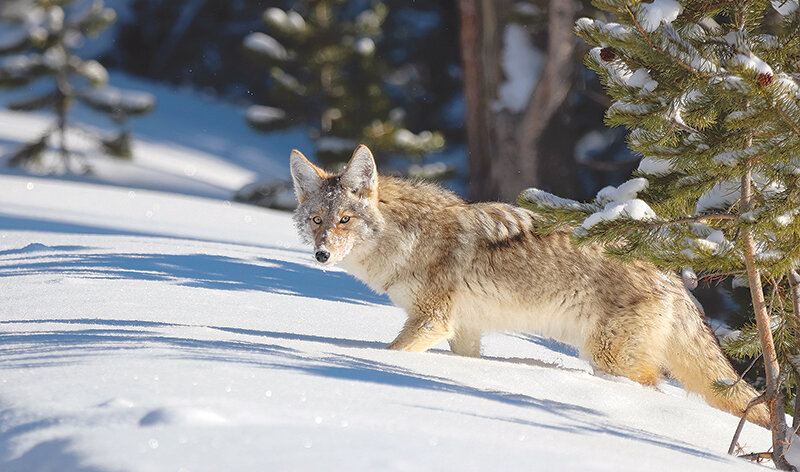
As shooting technology improves, the Park County Predator Board has purchased newly available improvements to increase the odds of removing predators threatening area livestock. Now they are researching the use of suppressors with hopes they can take down predators without disturbing area residents living near sheep and cattle operations while at the same time protecting their shooters’ hearing.
The timing couldn’t be better due to a change in federal regulations. When the Big Beautiful Bill was signed into law, the $200 tax stamp on suppressors, rifles with barrels less than 16-inches, shotguns with barrels less than 18-inches, and any other weapon (a category of restricted firearms that does not easily fit in the other two categories) were eliminated.
However, the tax remains on fully automatic guns and other devices regulated under the National Firearms Act, which was authorized by Congress in 1934.
As a result, those registering a suppressor or a short-barreled firearm after Jan. 1, 2026, will no longer be required to fork over that extra hard earned cash on top of the price of the suppressor. Models can be had for anywhere from a couple hundred bucks to well over $1,000.
Those wanting to buy a suppressor (aka silencers and cans) will still be required to go through the usual process of submitting forms, fingerprints, and passing a background check, but they will no longer have the added burden of sending more money to the government.
Suppressor benefits
Firearm suppressors, often mistakenly called silencers, offer advantages including hearing protection. In 2024, the American Academy of Otolaryngology (ear, nose and throat doctors) endorsed the use of firearm suppressors as an effective method of reducing the risk of hearing loss, especially when used in conjunction with conventional hearing protective measures.
“The only potentially effective noise control method to reduce [shooters’] noise exposure from gunfire is through the use of noise suppressors that can be attached to the end of the gun barrel,” the organization reported this past November.
Suppressors also improve accuracy due to reduced recoil and muzzle rise, provide better comfort and communication at the range, reduced muzzle flash, and less disturbance for others afield or living near a range or popular hunting areas. The devices work by trapping expanding gases, diminishing both sound and flash, though they don’t make guns silent, just much more quiet.
The monetary deregulation means those manufacturing suppressors will see sales increase dramatically as the advantages are clear, according to industry insiders. There are also many manufacturers who have recently added suppressors to their product list, which has already started to drive down the cost of a can.
Waiting until the June, 2026 meeting to approve the plan, the board would likely avoid a backlog of applications. The Bureau of Alcohol, Tobacco and Firearms is expecting to slow down approval rates during the rush to purchase suppressors on day one of the new regulations.
The board has already purchased a thermal (night vision) scope and binoculars to increase their effectiveness when their weapon is used. Lowering the noise level of gunfire from using a suppressor on firearms is already legal in a majority of states, including in Wyoming, according to the National Rifle Association.
“The sound created by shooting a gun ranges between approximately 140 dB and 175 dB. The average suppressor lowers the level of that sound by about 15 dB to 45 dB. That’s about as much as what your average hearing protection, like ear plugs or shooting muffs, reduce the noise,” NRA journalist Jeremiah Knupp reported.
One big advantage to using a suppressor is that, largely due to hunting predators at night, rifle shots can cause disturbances where residential developments are intermingled with agricultural land — like sheep ranches near Powell. When gunfire can be heard after dark, there is often a report to law enforcement agencies.
“If [one of the board members] wants to take [the board owned] gun out and it doesn’t have a suppressor on it, he’s going to be talking to the cops. Guaranteed,” said Wildlife Services employee Monty Nicholson.
The board is also considering offering federal Wildlife Services employees working in Park County a one-time stipend to cover the cost of purchasing a suppressor.
Opponents of suppressors claim it might decrease chances of catching poachers, and they pose public safety risks by making it harder for police and victims to locate shooters, increasing the likelihood of ambushes. There were no questions or statements from the general public opposing the possible plans.
Election results
While the board is considering making a change in their gun builds, they voted to keep the organization of the board exactly the same by unanimously voting to retain President Regan Smith, Vice President Shane Smith and Secretary/Treasurer Ben Anson. Rori Renner and Keith Schuebel, who both represent cattle interests, were also both unanimously retained.
A running joke among board members: If you want to leave your position on the board, you first have to find your own replacement.


