Clear, 48° F
A Cody man accused of trying to get a 17-year-old girl to become a prostitute and sleep with him asserts that he’s not guilty by reason of mental illness — and he wants a judge, rather …
This item is available in full to subscribers.
The Powell Tribune has expanded its online content. To continue reading, you will need to either log in to your subscriber account, or purchase a subscription.
If you are a current print subscriber, you can set up a free web account by clicking here.
If you already have a web account, but need to reset it, you can do so by clicking here.
If you would like to purchase a subscription click here.
Please log in to continue |
|
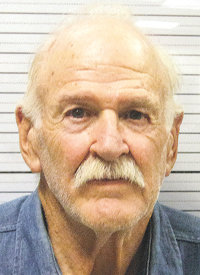
A Cody man accused of trying to get a 17-year-old girl to become a prostitute and sleep with him asserts that he’s not guilty by reason of mental illness — and he wants a judge, rather than a jury, to hear his case. However, District Court Judge Bill Simpson has so far been resistant to allowing 81-year-old Kenneth “Val” Geissler Jr. to waive his right to a jury trial.
Geissler is facing a felony count of promoting prostitution in the 2018 case, along with a misdemeanor count of unlawful contact that alleges he once kissed the teenager without her consent.
Following a series of psychological evaluations, Geissler was allowed to enter a plea of not guilty by reason of mental illness earlier this year. At trial, Geissler’s attorney will have to prove “by the greater weight of the evidence” that his client either lacked the ability to understand his conduct was wrong or was unable to obey the law because of his mental conditions.
The case had been set to go before a jury, but in late October, Geissler’s defense attorney and the Park County Attorney’s Office jointly requested a bench trial. However, Judge Simpson quickly rejected that request, offering no explanation for his reasoning in a brief order.
Earlier this month, defense attorney Tim Blatt and Deputy Park County Attorney Jack Hatfield asked Simpson to reconsider, contending the decision really wasn’t up to him.
“It’s the defendant’s [Geissler’s] right to select his forum and to waive his jury trial, and absent some kind of compelling reasons — such that he doesn’t understand what he’s doing, or there’s some other deficiency — the state believes it would be abuse of discretion to deny Mr. Geissler his right to be tried before the bench,” Hatfield told the judge. He said that, under the law, prosecutors are effectively bound to go along with whichever option Geissler chooses.
In his arguments for a bench trial, Blatt gave an unusually detailed explanation of why he and his client would prefer to take their case to a judge rather than a jury.
“We have allegations of not so much sexual misconduct, but sexual conversations and letters that certainly would come off to be extremely embarrassing to Mr. Geissler [and] would come off as somewhat shocking, maybe to a jury,” Blatt said.
In conversations and letters in 2018, Geissler is alleged to have encouraged the 17-year-old to become a “whore,” going into explicit detail on what sexual acts she should perform for clients and once suggesting she watch a porn video at his home so she could get some ideas. He allegedly told the girl that “he would give [her] ‘clients’ around town and pay her $500 per hour,” charging documents say. The girl had reportedly bought a car from Geissler and, according to the allegations, he suggested she pay him off with sex. He also is alleged to have encouraged her to break up with her boyfriend and, in August 2018, to have “grabbed [the girl] by the shoulders and kissed her on the lips with an open mouth.”
Charging documents compiled by Cody police say Geissler has also been accused of having a sexually explicit conversation with another Cody teen, though he is not charged with any criminal wrongdoing in that case.
Given that the pending criminal case involved a 17-year-old, Blatt said there’s concern a jury might disregard Geissler’s defense, potentially rejecting the idea that “someone should be discharged or not held responsible” because of mental infirmity.
In contrast with a judge, a panel of jurors “does not have the understanding of our right to present such a particular defense,” Blatt said. Under Wyoming law, “a person is not responsible for criminal conduct if at the time of the criminal conduct, as a result of mental illness or deficiency, he lacked substantial capacity either to appreciate the wrongfulness of his conduct or to conform his conduct to the requirements of law.”
Hatfield said Judge Simpson is best positioned to weigh the evidence and sort through the “pretty highly technical arguments” about whether Geissler is guilty or not guilty by reason of mental illness.
Three different doctors have evaluated Geissler’s competency. Blatt said a bench trial would be more efficient and significantly less expensive for his client, in part because the parties would rely on the doctors’ written reports and opinions instead of in-person testimony.
Further, amid the COVID-19 pandemic and the various precautions being undertaken, Blatt guessed it would take several days to seat a 12-member jury. And that’s assuming a jury trial is even possible: Citing surging case numbers around the state, the Wyoming Supreme Court issued an order last week that says “no jury trials should be conducted until further notice.”
Like Hatfield, Blatt also argued the decision between a jury and a bench trial was not one for the judge to make.
“Given the reasons for Mr. Geissler’s request, and the belief that that’s the only way he will get a fair and impartial trial, it seems like with the court’s denial, the court has stepped in and [is] saying, ‘We’ll decide what’s in Mr. Geissler’s best interests …,’” Blatt said. “And I would respectfully request that I think that’s a decision best left between Mr. Geissler and his counsel.”
Later in the hearing, Judge Simpson later made a point of confirming that — if he considered certain factors laid out in past Wyoming Supreme Court precedent — he could order that the case go before a jury. But Hatfield said the judge’s discretion was limited, and generally revolves around whether Geissler understands the rights that he’s giving up by choosing a bench trial.
“It seems clear that Mr. Geissler clearly understands the nature of the jury trial right, and understands what he is waiving,” Hatfield said, citing testimony Geissler gave at the hearing.
Hatfield also asked the judge to let the parties know if there’s another reason for blocking a bench trial.
Simpson did suggest that the state needed to consult the victim in the case, though Hatfield disagreed.
“The state does not believe that this is something that has anything to do with any kind of decision or anything from the victim. Rather, this is the defendant’s right to forum selection,” Hatfield said.
“Well, I understand that, but the victim, under the [Wyoming] Victims Bill of Rights, should at least be advised,” Simpson said. “And at this point, we have nothing to verify or confirm that ... the alleged victim has been advised.”
Hatfield said the teenager would be notified and the judge said he would attempt to issue a decision “shortly.”
In the meantime, Geissler remains free on bond. He spoke at a Park County Commission meeting on Nov. 10, expressing some confusion and raising some concerns about a neighbor’s plan to amend the boundary lines of lots inside their adjoining subdivision.